書海 ApsûVoyage of a Thousand Books
選擇語言 · Choose your language

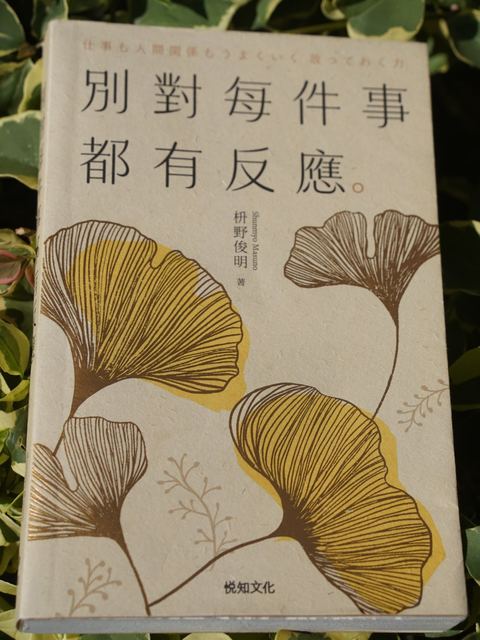
Who is this book for?
- People who care a lot about how others see them and constantly read others' moods
- Those overwhelmed by messages, social media and the sheer volume of information
- People prone to regret and anxiety who often take others' problems on themselves
- Anyone who wants a bedside book they can open to any entry
Who is the author?
- Born in 1953 in Kanagawa, Japan; head priest of Kenkoji, a Soto Zen temple, who trained at Sojiji, a head temple of the Soto school, after university
- Professor of environmental design at Tama Art University and an internationally known Zen garden designer, with works including the garden of the Canadian Embassy in Tokyo and a Japanese garden in Berlin; awarded Germany's Federal Cross of Merit
- Named by Newsweek Japan in 2006 as one of the “100 Japanese most respected by the world”
- Author of many bestsellers on Zen and daily life; the English translation The Art of Simple Living became an international bestseller
Other BooksDon't React to Everything 2: Practicing Non-Attachment (2025, Taiwan edition);The Art of Simple Living / Zen: The Art of Simple Living (2019, English translation)
Book Structure
🔒 Arrive at Tasmania and visit the Short-beaked Echidna to unlock this
Sail to TasmaniaThe Core Idea: The Power of Letting Be
The Japanese title translates roughly as “The power of letting things be (放っておく力), which makes work and relationships go smoothly.” The author builds on the Zen phrase “hōgejaku”: cast off all attachments.
- Many things can't be controlled by our own strength: what others think, whether people can fully understand each other, what the future holds—none of it is ours to decide
- Put your energy into the present: focus on “what you're doing right now” and “what you can do now”
- Here, now, yourself: doing only what you should do at this moment, in this place, as yourself—this is the book's core footing
- Know the difference: being able to tell what “must be let go” from what “shouldn't be let go” is how to live well
The book contains 99 Zen practices, each about one or two pages, and you can start reading anywhere:
- Don't force your way in (001–021): relationships are better a little “lighter”
- Don't let everything bother you (022–040): ways out of unease, anxiety and anger
- Don't react to everything (041–061): practices to stop wearing down your mind
- Don't wear yourself out for nothing (062–081): ways of thinking that spare you needless trouble
- Don't insist on deciding right and wrong (082–099): secrets to living with ease
Chapter 1: Don't Force Your Way In—Lighter Relationships Are Better
With other people, the author advocates keeping some distance, not interfering and not demanding to be understood; a “lighter” relationship is actually easier.
- Stay quiet, don't try to change others: don't isolate yourself or form cliques; watch quietly and don't interfere. The same principle applies between parents and children, and bosses and staff
- Understanding half is just right: you needn't fully understand others; what you can't understand, choose to let go
- Family members are still other people
- At work, keep things light: don't isolate yourself or form factions; stick to not interfering
- Stop constantly reading others' moods: always watching others' faces really comes from feeling small, bending yourself to fit them. Sincere interaction is what makes relationships last
- Enrich your time alone: solitude is a chance to reflect on the past and think about the future; being alone in rich nature is life's greatest luxury
- Don't let social media use you; stop keeping score of gains and losses; go with the flow
- Be humble, humble, and humble again; and widen your “circle of good mood” where you feel at ease
- Let go of the past: what's gone is gone; say goodbye to past glories
- Beware of negative people
Chapter 2: Don't Let Everything Bother You—Escaping Unease, Anxiety and Anger
- If you don't know, stop thinking about it: there's no use pondering what can't be known; just be a “forgetful person”
- Take off the nice-guy mask: not pretending makes relationships easier
- Don't look up the “average”: there's no “average life,” so don't compare others' choices with yours; if you care about public opinion, you've already lost
- If you must compare, compare with “yesterday's you”
- Forget what you've done for others right away; on the other hand, remember to thank those who support you
- Broken promises are natural, “the unexpected” makes life more interesting: accept that plans will be disrupted
- Stop regretting and start reviewing: turn remorse into reflection and examine yourself regularly
- Don't dwell on “small gaps”, and practice becoming someone who can tell a joke
- Deal with things you don't use: unused things are like excess fat on the body, weighing down the mind; and it's not “throwing away,” it's “letting go”
Chapter 3: Don't React to Everything—Stop Wearing Down Your Mind
Modern people are trained to respond to everything instantly, and the mind wears down bit by bit. This chapter teaches you to take back your attention.
1. Manage the gates of information
- Close the gates of information now and then: a necessary habit for inner calm
- Never binge on information
- Don't take everything at face value
2. Slow down your reactions
- Take one breath before answering; speak with care
- Don't rush, don't rush, don't be impatient; learn to slow down
- Say “I don't know” with confidence: being thought behind the times is fine; no need to pretend you know everything
3. Hold your own center
- Live with complete autonomy: the “everyone” in “everyone does it” doesn't actually exist; it's just an excuse to follow along
- Don't easily bend your principles or drift with the crowd
- Ninety percent of other people's troubles are none of my business; don't meddle, and don't expect too much
- Try other perspectives, break the habit of repeating the same old lines, and fully understand that “everyone is different”
- Beware of waste; don't keep drowning in sadness; freely admit that “good is good”
- Concentrate fully on the work in front of you
Chapter 4: Don't Wear Yourself Out for Nothing—Thinking That Spares You Trouble
- Here, now, yourself: when anxious or low, bring your attention back to what you should do right now instead of sinking into emotion
- Those who cling to the past will lose the future; work, too, is impermanent
- Don't count on tomorrow: the Zen saying “a lax monk does not look forward to tomorrow”—no one knows whether tomorrow will come, so finish today's work today and focus on what you can put effort into
- Think as optimistically as you can, and make small changes every day to escape standing still
- Stick to your own way of doing things
- Play your own role well, and keep refining what you're good at
- Don't make decisions at night
- Don't underestimate yourself, and don't overestimate yourself; don't make things hard for yourself or for others
- Stay away from competing for favor, and protect yourself from “competition fatigue”; filter your options again
- Higher education doesn't mean being good at the work; stay away from wrongdoing; improve your foresight
Chapter 5: Don't Insist on Right and Wrong—Secrets to Living with Ease
- Life has no fortune or misfortune, things are neither good nor evil: when in pain, remind yourself that “all things are impermanent,” and everything will end
- Your choices are all correct: there's more than one right answer, and “how you carry it out” matters more than “what you choose.” The author echoes Lewis Carroll: if you don't know where you're going, any road will take you there
- Ignore “voices from the outfield”: like a baseball manager who needn't heed the jeers from the stands, just focus on making the best call. With unpleasant criticism, sometimes turning a blind eye is wisdom—meet it lightly with “here we go again” and don't hold on
- Regret is only delusion; failure is just a small scrape
- Accumulate diligently; dreams aren't something to “hold in your hand” but to “hang up high”
- When you're busy, you need a breather all the more
- “Normal people” don't exist
- “Sound arguments” don't persuade people: even if you win, you've no right to crush the other person; stepping back opens up the sky and puts out the spark of conflict
- Originally, people have nothing at all
- Ask yourself what your mission is, and in the end do your best, then let the rest go
Putting the Power of Letting Be into Daily Life
The practices that recur throughout the book can be condensed into a few daily exercises:
- Sort first: when something bothers you, ask whether it's within your control. Other people's matters, the past and the future—let them go first
- Write it down: sort out your thoughts by writing, and find one thing you can do now
- Pause for one breath: before replying to someone or answering a message, stop for a moment; don't rush to react
- Save your reactions for a few important things: your mental energy is limited; you needn't take a position on everything
- Take back your attention: read others' faces less, compare with averages less, listen to outfield voices less
- Return to here, now, yourself: do today's work well and leave the rest to impermanence
The author stresses that the key is knowing how to tell what “must be let go” from what “shouldn't be let go,” and saving your strength for the people and things that truly matter.
Shang's Take
More Book Notes
 Leave a bottle
Share your thoughts! You might meet voyagers who think just like you.
Register as a voyager to open the bottles.
0 bottles
Shang
Shang's books
Voyager's Guide
This world
The Sea of Books has 16 real islands, one for each subject. Every building on an island is a book.
What you can do now
- Tap an island on the chart to go ashore
- Tap a building to read the notes on that book
- Meet Shang in the Storyteller's Cabin
Coming soon
- Chapter 2: register as a voyager, sail your ship, collect building badges, send message bottles
- Chapter 3: shells, the harbor market, clearing the fog, rankings
- Chapter 4: private chats with other voyagers
Symbols
Storyteller's Cabin registry
Before you set sail, we'll register your ship.