書海 ApsûVoyage of a Thousand Books
選擇語言 · Choose your language
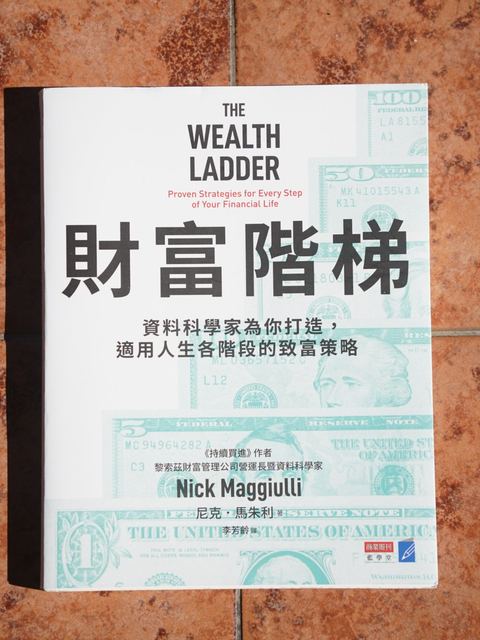
Who is this book for?
- People who have read many personal finance books but aren't sure which advice fits their current stage
- Office workers who have just started saving and are torn between “cut spending or raise income”
- Middle-class families who have built some assets and want to know what to do next
- Readers of Just Keep Buying who want to understand more about how wealth relates to life choices
Who is the author?
- An American personal finance writer and data scientist; Chief Operating Officer (COO) and data scientist at Ritholtz Wealth Management
- Runs the blog “Of Dollars And Data,” which analyzes personal finance with data and has long tested common money claims
- His previous book, Just Keep Buying, was a bestseller; this book continues his data-driven style
Other BooksJust Keep Buying (2022)
Book Structure
🔒 Arrive at Easter Island and visit the Sooty Tern to unlock this
Sail to Easter IslandThe Wealth Ladder: Six Levels
The author uses household net worth to divide wealth into six levels, each ten times the one before. His observation: people with $500,000 and $400,000 live much the same; for your lifestyle to change noticeably, your wealth usually has to grow by an order of magnitude. Each level also matches a kind of “spending freedom.”
- Level 1: Paycheck-to-Paycheck—net worth under $10,000 (about NT$300,000). About a fifth of American households are here; one job loss or illness can lead to hardship.
- Level 2: Grocery Freedom—$10,000 to $100,000. You no longer have to pinch pennies at the supermarket.
- Level 3: Restaurant Freedom—$100,000 to $1 million. You can order what you want at a restaurant without checking the price first. This is the most common level for American households.
- Level 4: Travel Freedom—$1 million to $10 million. You can plan trips as you like without scrimping on flights and hotels.
- Level 5: House Freedom—$10 million to $100 million. You can buy the home you want to live in.
- Level 6: Impact Freedom—over $100 million. You can use your wealth to influence others and society on a large scale, for example through philanthropy.
The makeup of assets also differs by level: lower levels hold mostly cash and cars; middle levels are mainly the family home; higher up come retirement accounts and stocks; and at the very top, mostly private business equity.
Two Practical Rules: 0.01% and 1%
1. The 0.01% rule: what you can spend without thinking
Any purchase under one ten-thousandth (0.01%) of your net worth basically isn't worth agonizing over. For someone with a net worth of $100,000, a $10 coffee isn't worth fretting about; for a billionaire, even a $100,000 car is small change. The “spending freedom” names for each level come from this rule.
Put another way: net worth × 0.01% ≈ the amount you can spend each day without pain. In New Taiwan dollars, someone with a net worth of NT$5 million basically needn't hesitate over a meal under NT$500, and can treat it as an everyday small pleasure. The higher your wealth, the bigger this amount—spending standards should be based on “wealth,” not just “income.”
2. The 1% rule: what money is worth earning
If an opportunity to make money can raise your net worth by at least 1%, it's worth doing; if not, let it go.
- At lower levels: a side gig paying a few hundred dollars already exceeds 1% of net worth and is well worth it
- At middle levels: side gigs matter less; learn skills that lead to higher-paying jobs
- At higher levels: salary alone can hardly reach 1%; consider owning a business or equity
Together, the two rules remind readers that the same amount of money means completely different things at different levels. At lower levels, small sums are worth working for; at higher levels, spending time haggling over small amounts or taking small jobs is a waste.
What to Do at Each Level
The book's central argument: the strategy that gets you up one rung is usually not the strategy that gets you up the next.
Level 1: Safety first
At this level there's little spending to cut, so raising income matters far more than saving. The focus is building an emergency fund and avoiding high-interest debt, so one stroke of bad luck doesn't send you back to the start.
Level 2: Invest in yourself
At this stage the highest-return investment is your own human capital: education, certifications, sales skills, technical skills, or switching to a career with a higher ceiling.
Level 3: Invest seriously
Once your income is stable, start steadily putting money into income-producing assets, until your investment returns gradually keep pace with your salary. At this level, also watch out for big expenses like houses and cars eating into your progress.
Level 4: Start a business, or choose to slow down
Here, investment returns start to exceed your yearly raises, but saving from salary can hardly take you higher. The book calculates that even with $1 million, saving another $100,000 a year at a 5% annual return, it would take about 23 years to reach $10 million. Reaching Level 5 usually requires owning equity, such as starting a business or holding company shares.
The author also admits that for most Level 4 households, the rational choice may be to “take your foot off the gas” and enjoy life.
Levels 5 and 6: Protect your wealth
The focus shifts from “offense” to “defense”: avoid over-concentrated assets, avoid major mistakes, and think about what kind of impact your wealth should leave.
Odds and Time of Climbing
Using the U.S. Survey of Consumer Finances, the author tracks how households move on the ladder and arrives at some useful numbers:
- Over 10 years, American households are about twice as likely to move up as down; over 20 years, about three times—time is on the side of those who keep building
- Of households starting at Level 2, about 44% are at Level 3 after 10 years and about 55% after 20; but only about 5% reach Level 4 after 20 years
- Of Level 4 households, only about 8% reach Level 5 within 20 years; most stay put
- Median household income rises from about $32,000 at Level 1, to about $197,000 at Level 4, to about $4.3 million at Level 6
- The median age of people with more than $1 million in assets is in the 60s—wealth is mostly the result of building over a long time
In other words: the first few levels are reachable for most people, but the higher you go, the more luck, equity and time matter.
Three Reminders for Climbing Up
- Raising income works better than saving hard: there's a floor to how much you can save, but no ceiling on income growth. The real engine of wealth is income, not how low you can push your spending.
- Take care of your health: a healthy body lets you work longer and gives your assets more years to compound—a practical way to close a gap in retirement savings.
- Let go of your ego: the author says the most expensive thing people own is often their “ego.” Copying the spending of the level above to save face is a common reason people get stuck.
Beyond Wealth: Knowing When It's “Enough”
The last part of the book is about what role money actually plays in life.
- Money is like salt: the right amount makes the rest of life tastier, but you can't eat it on its own. Without friends, family and health, money by itself doesn't help much.
- Diminishing returns on happiness: going from “struggling financially” to “doing okay” raises well-being dramatically; after that, more wealth brings less and less happiness. For people who are already happy, money can make them happier; but if you're neither poor nor happy, more money usually won't help.
- The goalposts keep moving: people quickly adapt to a new level of wealth, and once a goal is reached, they set a higher one.
- Higher levels have costs too: the richer you are, the more you suspect people's motives for getting close to you; the remaining problems are often about relationships, health and the mind, which money can't solve.
The ideal the author suggests: build enough wealth to feel secure, then turn your attention to time, health, relationships and the other things money can't buy.
Shang's Take
More Book Notes
 Leave a bottle
Share your thoughts! You might meet voyagers who think just like you.
Shang
Shang's books
Voyager's Guide
This world
The Sea of Books has 16 real islands, one for each subject. Every building on an island is a book.
What you can do now
- Tap an island on the chart to go ashore
- Tap a building to read the notes on that book
- Meet Shang in the Storyteller's Cabin
Coming soon
- Chapter 2: register as a voyager, sail your ship, collect building badges, send message bottles
- Chapter 3: shells, the harbor market, clearing the fog, rankings
- Chapter 4: private chats with other voyagers
Symbols
Storyteller's Cabin registry
Before you set sail, we'll register your ship.