書海 ApsûVoyage of a Thousand Books
選擇語言 · Choose your language

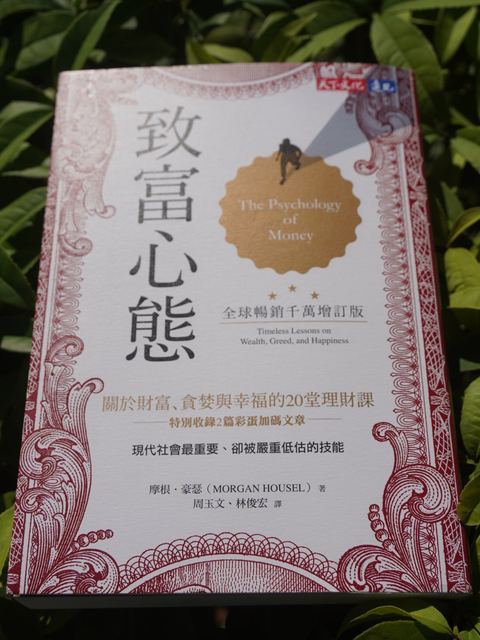
Who is this book for?
- People who know plenty of investing techniques yet keep making decisions they regret when markets swing
- Beginners who want long-term money sense without wading through dense finance theory
- People with decent incomes who still can't save and never feel it's enough
- Readers who want to work out what money should actually buy them
Who is the author?
- Partner at the US venture capital firm Collaborative Fund
- Former columnist for The Wall Street Journal and the personal finance site The Motley Fool
- Two-time winner of the Society for Advancing Business Editing and Writing (SABEW) Best in Business award, and recipient of The New York Times Sidney Award
Other BooksSame as Ever (2023);The Art of Spending Money (2025)
Book Structure
🔒 Arrive at Easter Island and visit the Toromiro Tree to unlock this
Sail to Easter IslandMoney Is Behavior, Not Knowledge
The author states it up front: doing well with money has little to do with how smart you are; the key is behavior, and behavior is hard to teach—even smart people often get it wrong. He contrasts two people:
- Ronald Read: the first in his family to graduate high school, he worked 25 years as a gas station mechanic and 17 years as a department store janitor, quietly saving all his life to buy blue-chip stocks. He died leaving about $8 million—$2 million to his stepchildren and $6 million to the local hospital and library.
- Richard Fuscone: a Harvard graduate and former Merrill Lynch executive who lived in an eleven-bedroom mansion. Heavy borrowing to expand led him to bankruptcy, losing nearly everything.
In other fields, a janitor can't beat a top expert; in finance, it happens—because outcomes are decided by patience, restraint and mindset.
How We Think About Money: Experience, Luck and “Enough”
1. No one's crazy
Everyone's view of money comes from their own unique experiences. For example, for people born in 1970, US stocks rose about 10-fold from their teens to adulthood; for those born in 1950, the stock market barely grew after inflation over the same ages. The two naturally have completely different instincts about “stocks.” What you've experienced is a tiny slice of the world, yet it dominates your picture of how the world works.
2. Luck and risk
Luck and risk are two sides of the same thing. Bill Gates attended Lakeside School, one of very few high schools in the world at the time that let students use a computer; his friend Kent Evans was just as smart but died in a mountaineering accident in high school and never got to co-found Microsoft. When judging success and failure, remember that not every result comes from effort, and not every failure from bad decisions.
3. Never enough
When writer Joseph Heller was told a hedge fund manager made more in one day than he had earned from Catch-22, he replied that he had something the manager would never have: “enough.” Not knowing what's enough leads you to risk what you have and need for what you don't really need. Social comparison is the biggest trap, because the ceiling is always higher.
Compounding, Getting Wealthy and Staying Wealthy
1. Confounding compounding
Of Warren Buffett's $84.5 billion fortune, $81.5 billion was accumulated after age 65. His secret isn't just investing skill but starting at age 10 and keeping at it for over 70 years. By contrast, quant legend Jim Simons earned annual returns of about 66%, but because he started at 50, his fortune is far smaller than Buffett's. Good investing isn't about earning the highest returns, but earning pretty good returns you can stick with the longest.
2. Getting wealthy vs. staying wealthy
Making money takes risk and optimism; keeping it takes humility and fear. Most important is “survival”: whatever happens, don't get forced out of the game, so compounding can keep working. The author recommends a mindset of “optimism with a touch of paranoia”—optimistic about the long term, wary of short-term things that could wipe you out.
3. Tails, you win
A few events drive most outcomes. The Russell 3000 index has risen about 73-fold since 1980, but about 40% of its companies effectively failed, and about 7% of extraordinary performers carried the overall return. Buffett has owned hundreds of stocks in his life, yet most of his wealth came from about 10 of them. So you can be wrong half the time and still succeed—as long as the few big winners get a chance to work.
Money's Highest Value: Freedom and Invisible Wealth
1. Freedom
The greatest dividend money pays is control over your time: waking up each morning able to say “I can do whatever I want today.” Research shows a sense of control over your life predicts happiness better than objective factors like income.
2. The Man in the Car Paradox
When we see someone driving a fancy car, we rarely think “that person is impressive”; we think “if that car were mine, people would think I'm impressive.” Trying to win respect with luxury cars and mansions usually works less well than expected; humility, kindness and empathy earn more respect.
3. Wealth is what you don't see
“Rich” is visible income and spending; “wealth” is money not spent—the luxury cars not bought, the diamonds not upgraded, options not yet converted into stuff. Precisely because it's invisible, it's hard to learn from the truly wealthy.
4. Save money
Building wealth depends more on your savings rate than on income or investment returns. Saving doesn't need a specific goal; savings give you flexibility to face surprises and opportunities. Beyond a certain income, what you really need is just what lies below your ego; lowering your desire for things is easier than raising your income.
Facing Uncertainty: Reasonable, Surprise! and Room for Error
1. Reasonable > Rational
Money decisions needn't aim for the most rational answer on a spreadsheet, but for a reasonable one you can stick with long term. For example, using a small amount of money to pick stocks to satisfy your curiosity, or choices made to “minimize future regret,” may not be optimal on a spreadsheet, but if they keep you in the market long term and stop you selling everything in a crash, they're good decisions.
2. Surprise!
History is a series of surprises. The events that shaped the 20th century most—the Great Depression, World War II, the birth of the internet, 9/11—were predicted by almost no one. Be careful using the past to predict the future; the most important events are often ones that have never happened before.
3. Room for error
Borrowing Benjamin Graham's “margin of safety”: prepare for your plan itself to go wrong. The question isn't “can my spreadsheet handle a 30% drop?” but “can I handle it psychologically?” Those forced out in the 2008 financial crisis missed the bargains that followed.
4. You'll change
People underestimate how much they'll change, which psychologists call the “End of History Illusion.” Goals set when young may not be what you want later; avoid extreme financial plans, accept changing your mind, and don't be held hostage by sunk costs.
The Market's Price, Stories and Pessimism
1. Nothing's free
The price of investment returns is volatility, fear and doubt. For example, Netflix rose about 35,000% from 2002 to 2018, yet on about 94% of trading days in that period it traded below its previous high. The author suggests seeing market volatility as a fee, not a fine: paying it is what earns long-term returns.
2. You and me
Bubbles often form because short-term traders and long-term investors play different games yet take cues from each other's prices. Be clear about which game you're playing, and don't be swayed by people with different time horizons.
3. The seduction of pessimism
Pessimism sounds smarter and gets more attention than optimism: a 1% market rise is a minor story, but a 1% drop is a red headline. Progress accumulates slowly while setbacks happen fast, so bad news is easier to see than good.
4. When you'll believe anything
People believe stories they want to be true. In the 10 years to 2018, about 85% of actively managed funds underperformed the market, yet huge sums still poured into them. Our understanding of the world is incomplete, but we fill in a complete story ourselves.
Takeaways and the Author's Confession
The author closes with a few simple principles:
- Be humble when things go well, and forgiving and compassionate when they go wrong
- Less ego, more wealth
- Manage your money in a way that helps you sleep at night
- Extend your time horizon—it's the most powerful investing tool
- Accept that many things will go wrong; a few right ones can still bring success
- Use money to gain control over your time
- Be nicer, and less flashy
- Save, just to save
- Pay the price of volatility—it's worth it
- Avoid extreme decisions that could force you out of the game
In “Confessions,” the author shares his own family's approach: aiming for independence, living below their income, keeping about 20% of assets in cash as a buffer (more than usually advised), and investing the rest long term in low-cost index funds. He admits it isn't the most rational approach, but for him it's the most reasonable.
Shang's Take
More Book Notes
 Leave a bottle
Share your thoughts! You might meet voyagers who think just like you.

Shang
Shang's books
Voyager's Guide
This world
The Sea of Books has 16 real islands, one for each subject. Every building on an island is a book.
What you can do now
- Tap an island on the chart to go ashore
- Tap a building to read the notes on that book
- Meet Shang in the Storyteller's Cabin
Coming soon
- Chapter 2: register as a voyager, sail your ship, collect building badges, send message bottles
- Chapter 3: shells, the harbor market, clearing the fog, rankings
- Chapter 4: private chats with other voyagers
Symbols
Storyteller's Cabin registry
Before you set sail, we'll register your ship.